[NEWS] New Straits Times - Why Malaysian should watch the first big-screen documentary about the Malayan sun bear
PUBLISHED BY: NEW STRAITS TIMES
PUBLISHED ON: 26 JULY 2026
BY: ELENA KOSHY
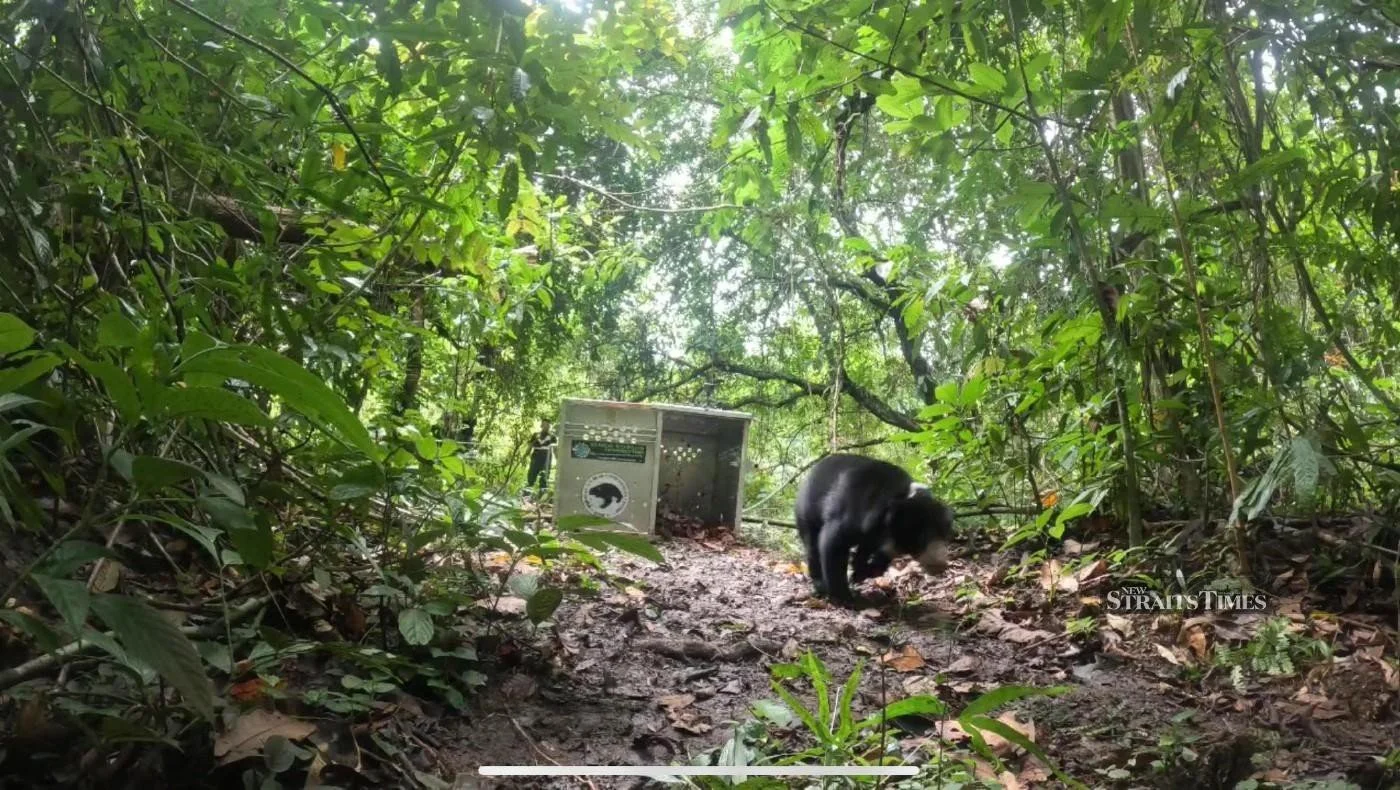
A defining moment as Itam steps out of the crate into freedom at Tabin Wildlife Reserve. Photo courtesy of the Bornean Sun Bear Conservation Centre.
CHUG! Chug! Chug!
The helicopter's main rotor gathers speed, the rhythmic thud growing louder as the aircraft begins to lift. Suspended beneath it is a transport crate carrying one precious passenger: Itam, a Malayan sun bear. As the helicopter climbs above the rainforest canopy, it carries more than a rescued bear. It carries hope.
Hope is the story of Itam, rescued from a life of human cruelty and rehabilitated at the Bornean Sun Bear Conservation Centre (BSBCC) in Sandakan. Today, she's making one final journey, not into captivity, but towards freedom. After everything she has endured, the forest is waiting to welcome her home.
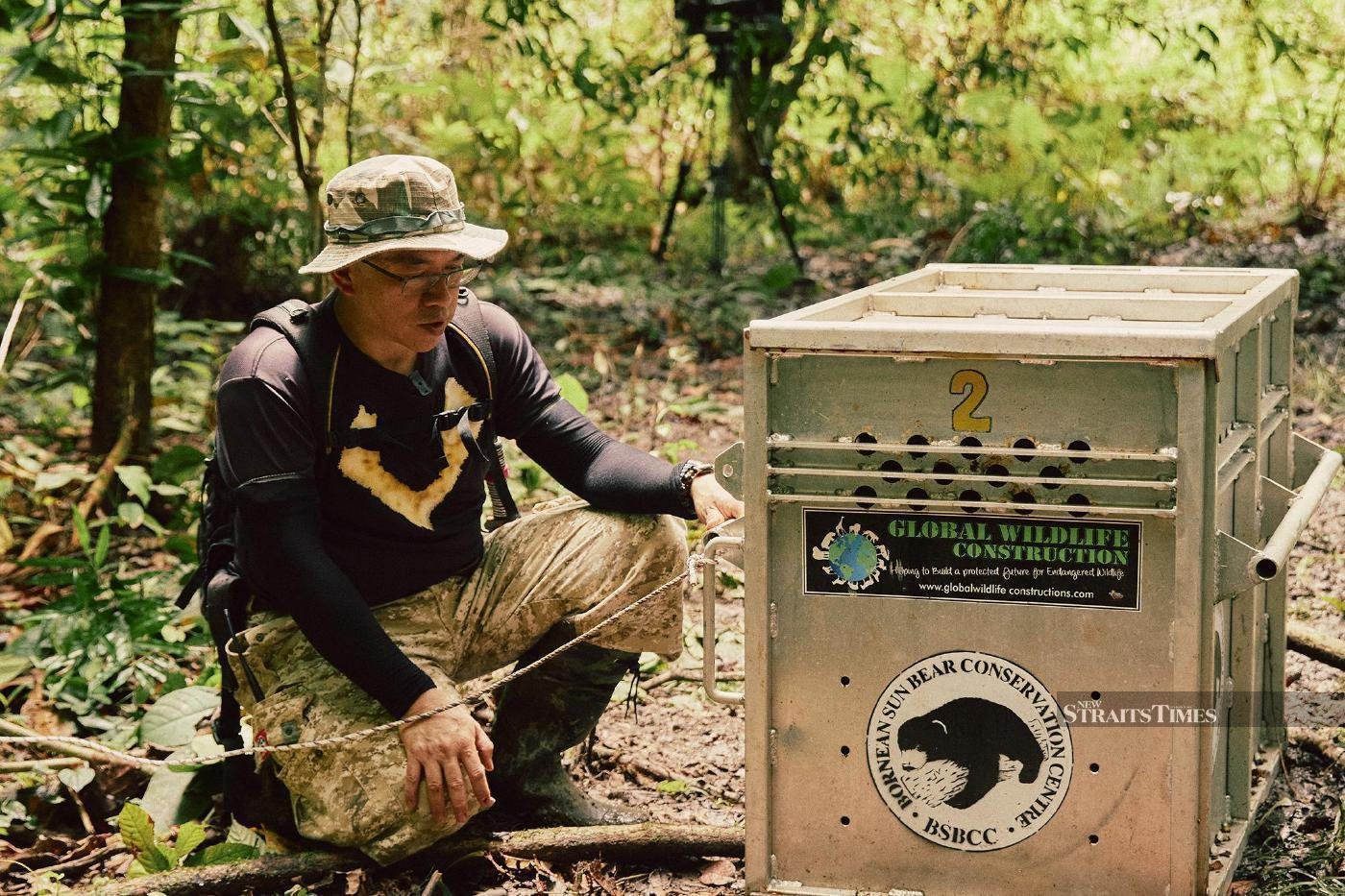
Dr Wong Siew Te (left) shares a quiet moment with Itam in the crate before her release into the wild. Photo courtesy of Bornean Sun Bear Conservation Centre.
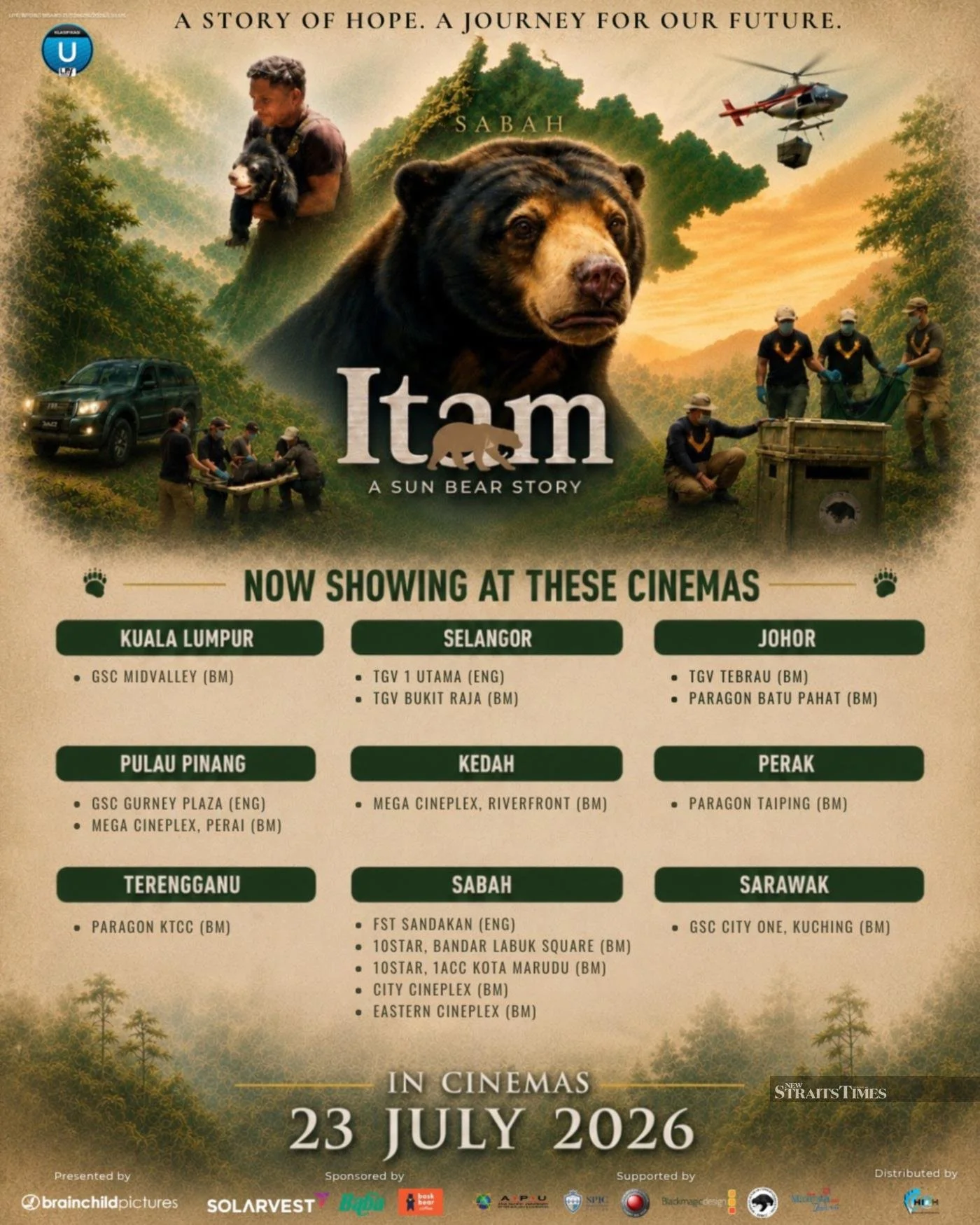
The powerful opening of Itam: A Sun Bear Story, a documentary by Brainchild Pictures, directed and produced by Raymond Tan, holds me transfixed.
This is more than a beautifully crafted film. It's a window into the often-unseen world of wildlife conservation, revealing the dedication, patience and sacrifice of those working tirelessly to give rescued sun bears like Itam a second chance at life.
Behind every successful release lies years of rehabilitation, careful planning and the unwavering belief that animals scarred by human actions deserve the opportunity to return to the wild where they belong.
DOCUMENTING WILDLIFE
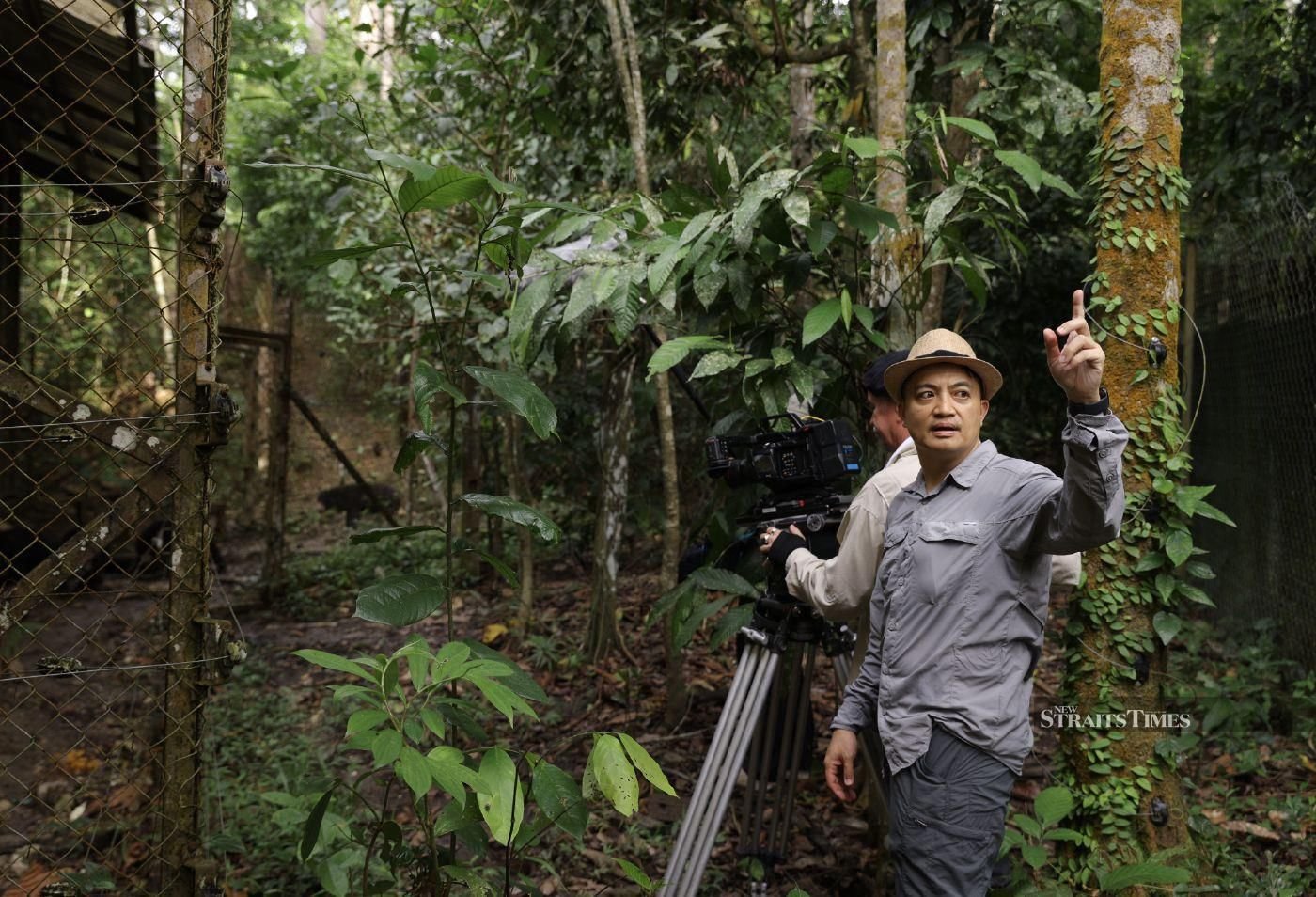
Raymond Tan at work in the rainforest, capturing the remarkable story of Itam and the conservation efforts to protect Malaysia's elusive sun bears. Photo courtesy of Rain Zheng.
Tan never imagined that a chance encounter with Dr Wong Siew Te, founder and chief executive officer of the BSBCC, would change the way he saw wildlife. Having known little about sun bears, he soon discovered that behind the shy, elusive animal was one of Malaysia's most remarkable yet overlooked species, fighting for survival.
"This is a uniquely Malaysian story, yet it is one that many people have never seen before."
For Tan, making Itam: A Sun Bear Story was more than another filmmaking project. It became both a responsibility and a calling to tell the story of a species that has long remained in the shadows.
"This is the first feature documentary about the Malayan sun bear to be shown on the big screen," he told the audience at the film's recent premiere.
The documentary also marks Tan's first venture into documentary filmmaking after directing two feature films.
"I'm learning a lot," he confides, adding: "When this sun bear story came to my attention, I couldn't just leave it."
Filming wildlife was unlike anything he had experienced before. Nature refused to follow a script. The bears moved on their own terms, the rainforest dictated the pace and every fleeting moment had to be captured as it unfolded. There were no rehearsals, no carefully choreographed scenes and no opportunity to call "cut" and start again.
"There was no second take. Everything was just one take."
Yet, beyond the breathtaking images of sun bears in their natural habitat, the documentary shines a light on the extraordinary work of the BSBCC in Sandakan.
Many of the bears arrive after enduring unimaginable suffering, rescued from the illegal wildlife trade, kept as pets or confined to tiny cages. At the centre, they're patiently rehabilitated, encouraged to rediscover their natural instincts and, whenever possible, prepared for the day they can return to the forests where they belong.
In telling Itam's story, Tan also pays tribute to the people whose lives are devoted to giving these bears another chance.
Through years of dedication, compassion and perseverance, the centre's veterinarians, caregivers and researchers quietly transform stories of cruelty into stories of hope, proving that while humanity has caused much of the bears' suffering, it also has the power to help them heal.
HOPE AND DESPAIR
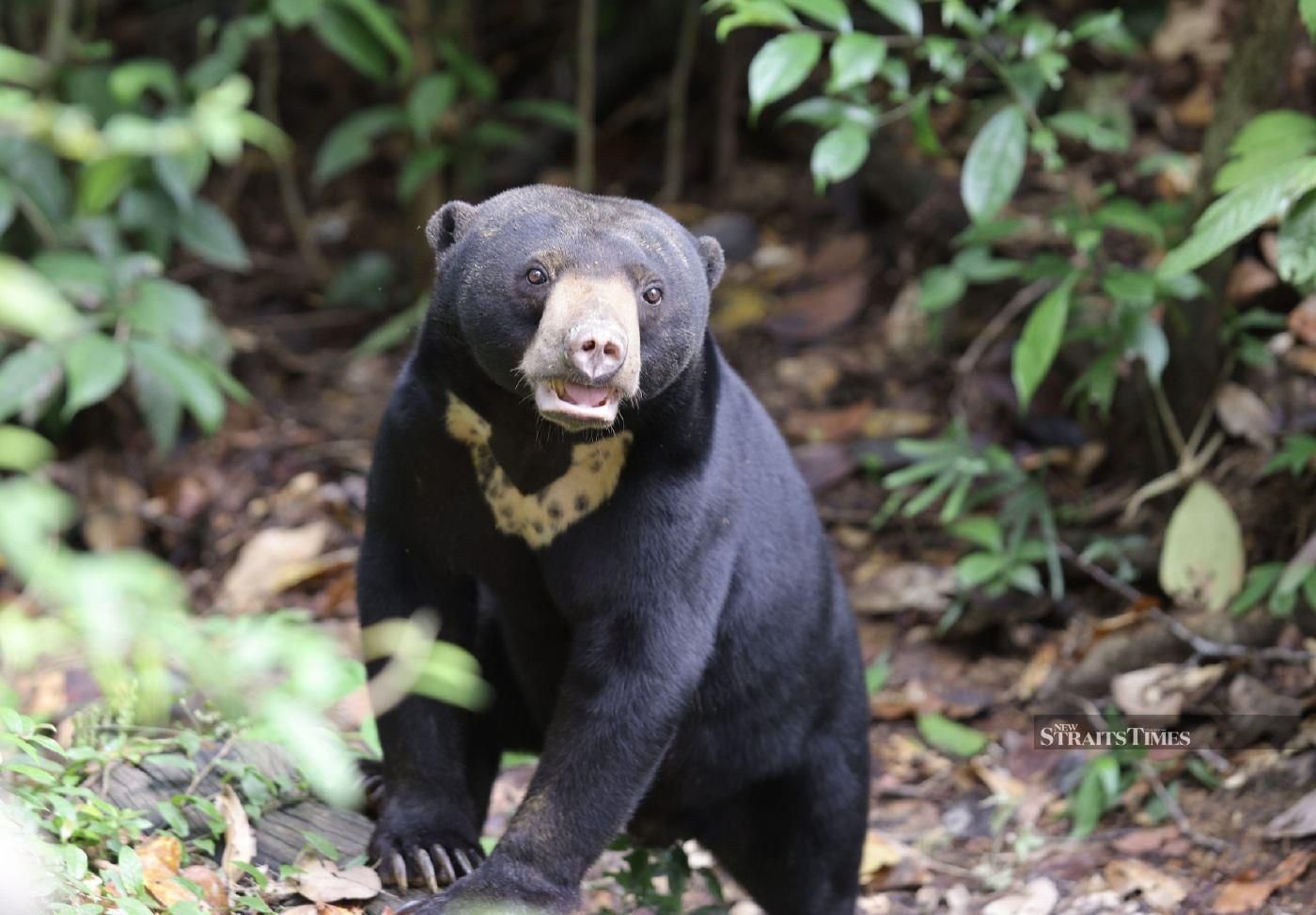
A Malayan sun bear, the world's smallest bear and one of Malaysia's most threatened wildlife species. Photo courtesy of Rain Zheng.
Audiences will leave Itam: A Sun Bear Story with more than just an appreciation for one rescued bear. The documentary offers a rare glimpse into the lives of sun bears, introducing viewers to a species that remains unfamiliar to many despite being the world's smallest bear and one of Malaysia's most remarkable native wildlife species.
Yet, the film also reminds us that the future of these gentle creatures hangs in the balance.
Both the Malayan sun bear (Helarctos malayanus malayanus) and the Bornean sun bear (Helarctos malayanus euryspilus) are classified as "vulnerable" in the International Union for Conservation of Nature (IUCN) Red List.
Their numbers continue to decline because of habitat loss from deforestation, poaching and the capture of cubs for the exotic pet trade.
Globally, the IUCN estimates that sun bear populations have fallen by more than 30 per cent over the past three decades.
In many ways, Itam's story is both a message of hope and a heartbreaking reminder of what is at stake. Her rescue and return to the forest embody the very best of humanity — compassion, science and unwavering determination coming together to undo the harm inflicted by people.
Yet every release into the wild is also a leap of faith. There are no guarantees, only hope that a bear given a second chance will once again find her place in the forest where she belongs.
But for every bear that finds a second chance, countless others remain hidden behind the walls of captivity, trapped in snares or disappearing as forests are cleared.
Watching the documentary, one question lingers long after the credits roll.
Conservationists are working tirelessly, often against overwhelming odds, to save not only sun bears but countless other species facing the same uncertain future. As habitat continues to disappear and human pressures intensify, are they fighting a losing battle?
Perhaps the better question is this: if they refuse to give up, how can the rest of us afford to?