𝐑𝐞𝐚𝐥𝐢𝐳𝐢𝐧𝐠 𝐰𝐢𝐥𝐝𝐥𝐢𝐟𝐞 𝐢𝐧 𝐁𝐨𝐫𝐧𝐞𝐨
Text by Tomomi Sakairi (APE Malaysia Volunteer)
I had always been interested in learning about the behaviors animals display in the wild, as my previous research experience had focused mainly on animals in laboratory settings. When I discovered BSBCC and APE Malaysia and learned about their work in sun bear rehabilitation and conservation, I knew I wanted to become involved in wildlife conservation. This motivated me to join the programme as a volunteer from Japan.
My favorite activity at BSBCC was feeding the sun bears outdoors. I learned that every bear has its own way of eating, and that their food preferences can vary as well. Observing these individual differences made me even more interested in understanding their behavior.
I particularly enjoyed observing how the bears interacted with their environment. Some bears climbed trees to rest or sleep during the hot daytime, while others did not. I wondered why. One of the bear keepers explained that some of the sun bears at BSBCC had been separated from their mothers when they were still cubs. As a result, they may have missed important opportunities to learn natural survival skills from their mothers, such as climbing trees, foraging for food, and responding to competition from other animals.
Through my volunteer experience, I gained a deeper understanding of the challenges involved in rehabilitating sun bears. Although many efforts have been made to prepare them for a return to the wild, successful rehabilitation and release remain challenging. There is still so much we do not know about sun bears and their natural behavior.
This experience made me think about what I can do for sun bears as a human being. Perhaps the first step is simply to learn, understand, and share what happens to sun bears as a result of human activities—something that everyone can contribute to.
One of the challenges I faced was feeding the bears outdoors. At first, I found it physically demanding to carry the food while walking along the slopes. However, I gradually became more accustomed to it day by day. I also learned why it is important to place food in different locations: doing so encourages the bears to explore their surroundings and search for their food, allowing them to express more natural behaviours. Eventually, what was once challenging became my favorite activity.
I feel honored to have had the opportunity to volunteer with BSBCC and APE Malaysia and to learn from the people working to protect sun bears. This experience has given me a new perspective on wildlife conservation and the importance of understanding animal behaviour. I hope that, together, we can continue to make a difference for sun bears and their future.
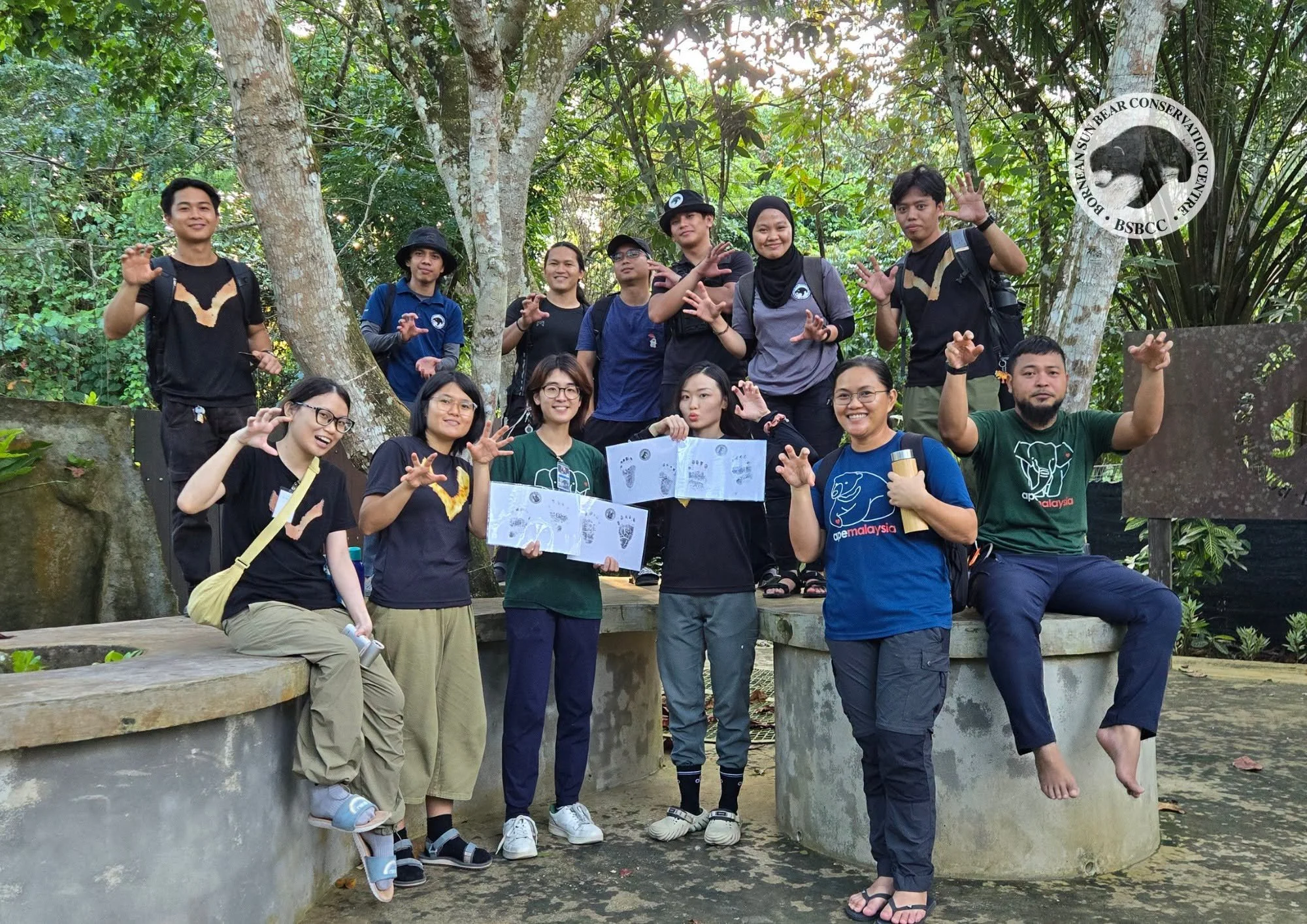
A little bear pose with the staff.
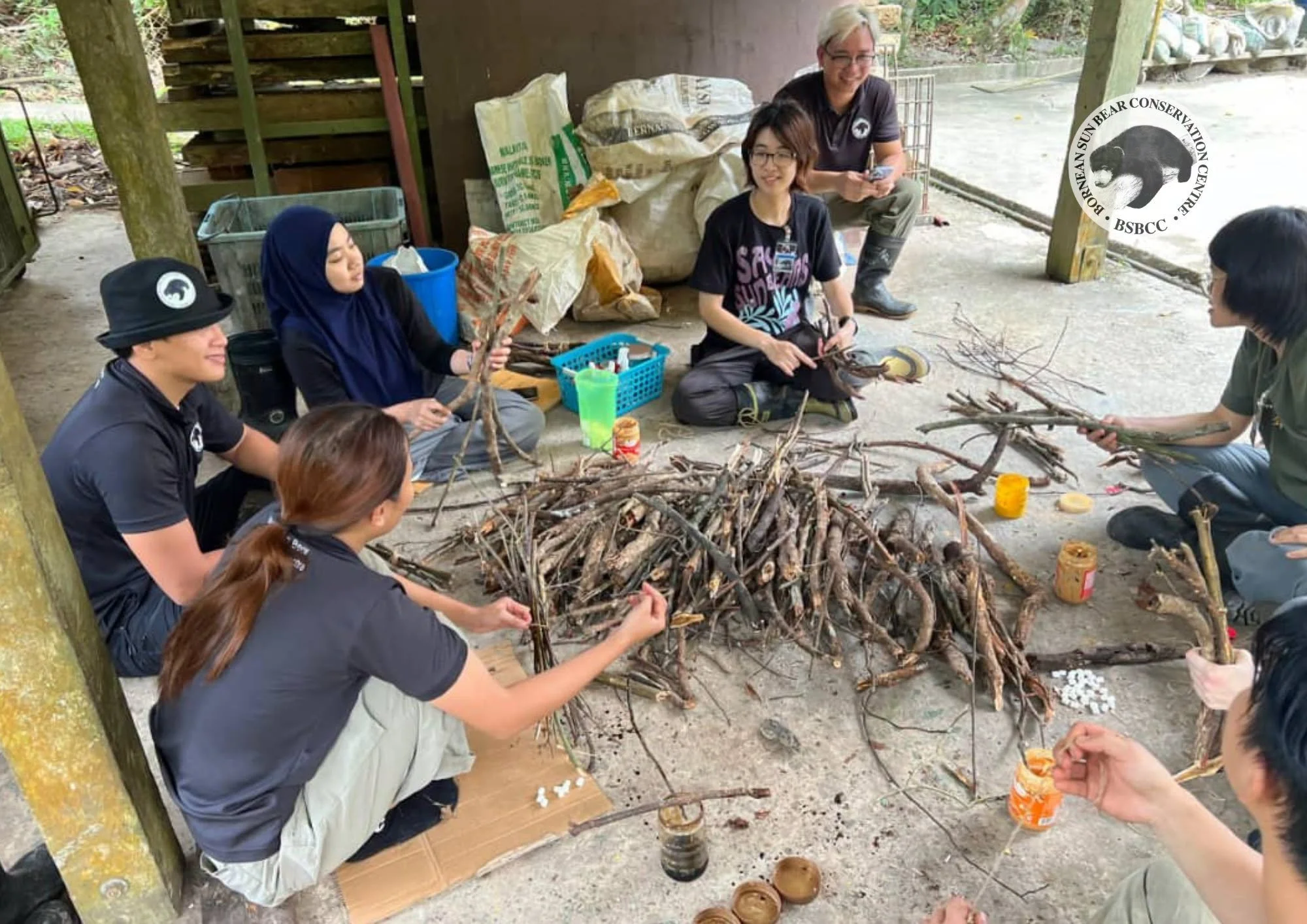
Who knew a few sticks could be so interesting? “Stick Paradox” gives the bears something to figure out, explore, and interact with — keeping their minds active even when they’re in the Bear House
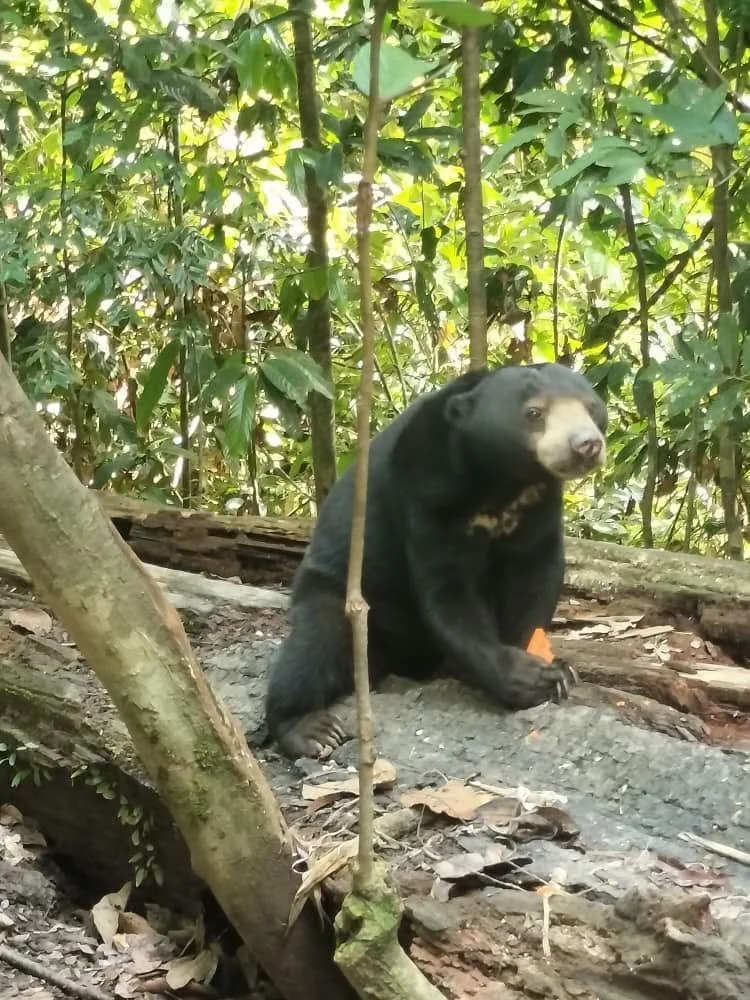
A handsome Fulung who is always ready for food. Give him some fruit, and suddenly, the whole world becomes his buffet!
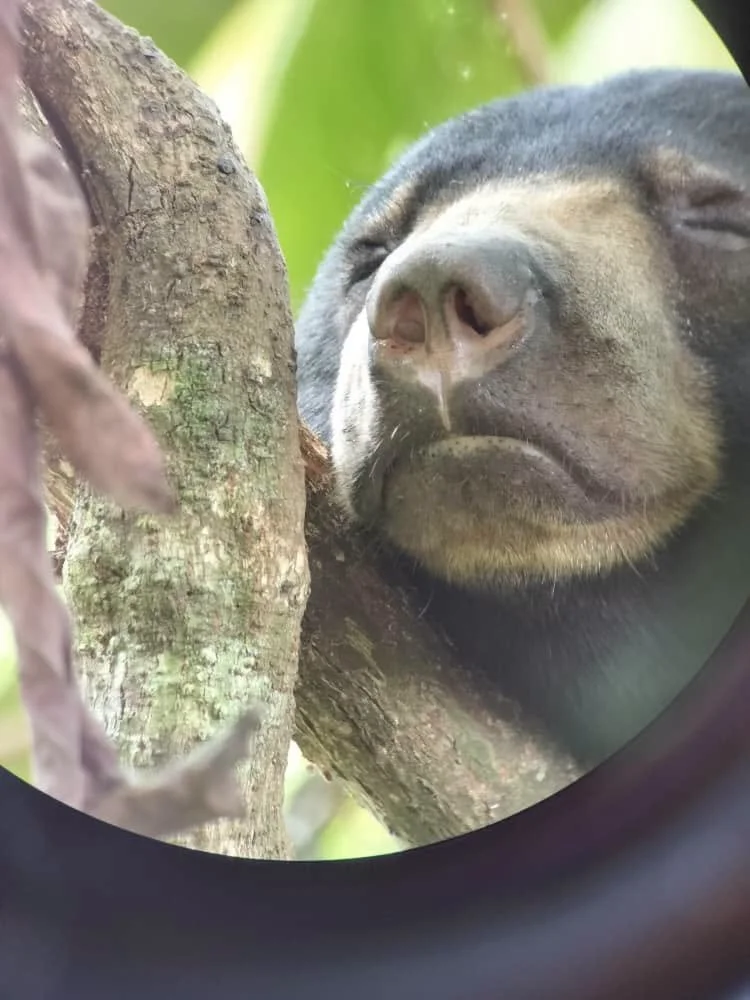
This is Romolina.
If I could introduce one sun bear to the world, I’d introduce her.
She enjoys climbing trees every day — doing what comes naturally to a sun bear. From exploring the branches to moving through the trees with confidence, Romolina gives us a glimpse of what life looks like when a sun bear is given the space to express its natural behaviours.
I’d love to share more of these moments with you — the real behaviours, curiosity, and little adventures that make sun bears so special.
This is Romolina, just being a sun bear.